At a glance
2 days; 3–4 with a mountain excursion
The castle, central museums and historic streets are walkable or reachable by the Town Sneaker bus. Kamikochi, Norikura and Shirahone require dedicated transport plans and should not be treated as quick city add-ons.
Spring and autumn are excellent for the city; mountain access is seasonal, summer is active, and winter brings clear views with cold and ice.
Core relationships are source-checked. Reconfirm transport and facility details before departure.
Why this town matters
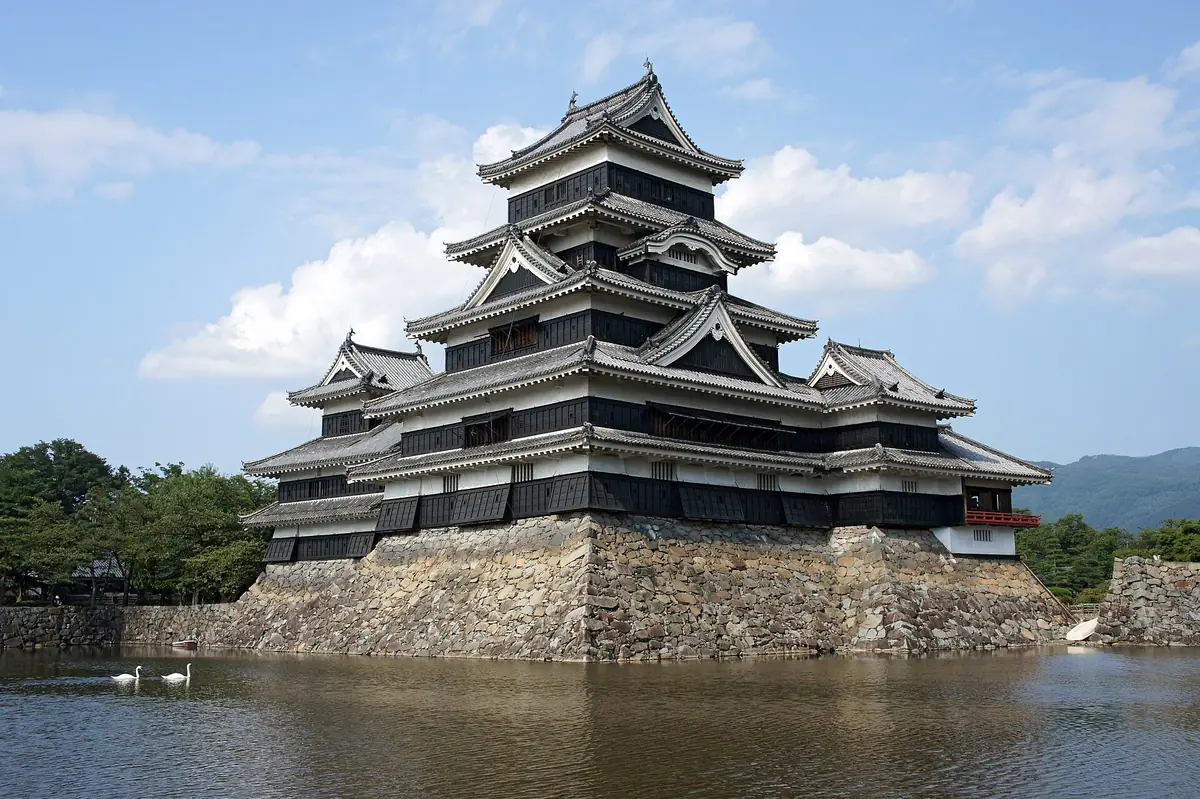
Matsumoto Castle deserves its reputation, yet the city works as more than a monument stop. Its moat, street pattern and merchant districts explain the castle town; museums and music add a modern civic identity; and the station is a practical base for mountain travel only when bus reservations and weather are handled seriously.
Works, people, history and culture
- Matsumoto Castle and one of Japan’s oldest surviving castle keeps
- Nawate and Nakamachi merchant streets
- The city’s museum and contemporary art culture
- A gateway role for Kamikochi, Norikura and the Northern Alps
What to see
- Matsumoto Castle and the surrounding moat
- Matsumoto City Museum of Art
- Nakamachi and Nawate streets
- Former Kaichi School
- A separate day for Kamikochi when the access season is open
See it now · Live video
Check current conditions
Matsumoto Castle, Utsukushigahara, Sawando, Mt Yari and Norikura through cameras collected by the city.
Matsumoto Castle and mountain gateways
Useful for comparing city and mountain conditions before combining the castle with a highland excursion.
- Camera operator
- Matsumoto City
- Checked
- 22 August 2026
This provider does not expose a verified stable direct stream, so its current-view page opens in a new tab. Availability, angle and update frequency can change. Use official weather, transport and emergency notices for decisions that affect safety.
Getting there
From Tokyo, major stations or airports
Limited Express Azusa trains run from Shinjuku, while Limited Express Shinano services connect Nagoya and Nagano. Highway buses also serve major cities; mountain destinations use separate buses and seasonal rules.
Getting around locally
The castle, central museums and historic streets are walkable or reachable by the Town Sneaker bus. Kamikochi, Norikura and Shirahone require dedicated transport plans and should not be treated as quick city add-ons.
2 days; 3–4 with a mountain excursion
Spring and autumn are excellent for the city; mountain access is seasonal, summer is active, and winter brings clear views with cold and ice.
Food, onsen and local culture
Soba, oyaki, sanzokuyaki chicken, miso and local craft connect the basin to wider Nagano. The city’s art identity is contemporary, not merely decoration beside the castle.
Connect neighboring towns
Use one day for castle-town history and one for museums and neighborhoods. Continue by bus toward Takayama or by rail toward Nagano after checking the seasonal timetable.

Alps, castles and craft cities
Cross central Japan through three cities whose castles, merchant districts and craft traditions make the mountain journey worth slowing down.
Matsumoto · Takayama · KanazawaOpen route →Etiquette and safety
Check official opening, weather and transport notices before departure. Temples, shrines, museums, historic streets and residential lanes are shared community spaces: keep routes clear, follow photography rules and never enter private property. The castle interior has steep original stairs. Mountain routes require separate weather, equipment and closure checks.
Questions before you choose Matsumoto
How much time should I allow?
2 days; 3–4 with a mountain excursion. This is the practical minimum for seeing the town without turning transport into the main activity.
Can I visit without a car?
The castle, central museums and historic streets are walkable or reachable by the Town Sneaker bus. Kamikochi, Norikura and Shirahone require dedicated transport plans and should not be treated as quick city add-ons.
When is the best time to go?
Spring and autumn are excellent for the city; mountain access is seasonal, summer is active, and winter brings clear views with cold and ice.
Information checked: 22 August 2026
Source register
Sources used for this page
Reconfirm changing information with the responsible organization before travel.
- Visit Matsumoto official city guideMatsumoto Tourism and Convention Association · Official tourism organization · checked 22 August 2026
- National Treasure Matsumoto CastleMatsumoto City · Municipality cultural site · checked 22 August 2026
- Responsible travel in JapanJapan National Tourism Organization · National tourism organization · checked 22 August 2026