At a glance
1–2 days; 3 days for the full festival cycle
Rail serves Kashima, Haranomachi and Odaka, but festival sites and coastal stops require buses, taxis, cycling or a car. Festival days bring road restrictions and special transport arrangements.
Late May for Soma Nomaoi; otherwise spring and autumn for museums, cycling and town exploration.
Core relationships are source-checked. Reconfirm transport and facility details before departure.
Why this town matters
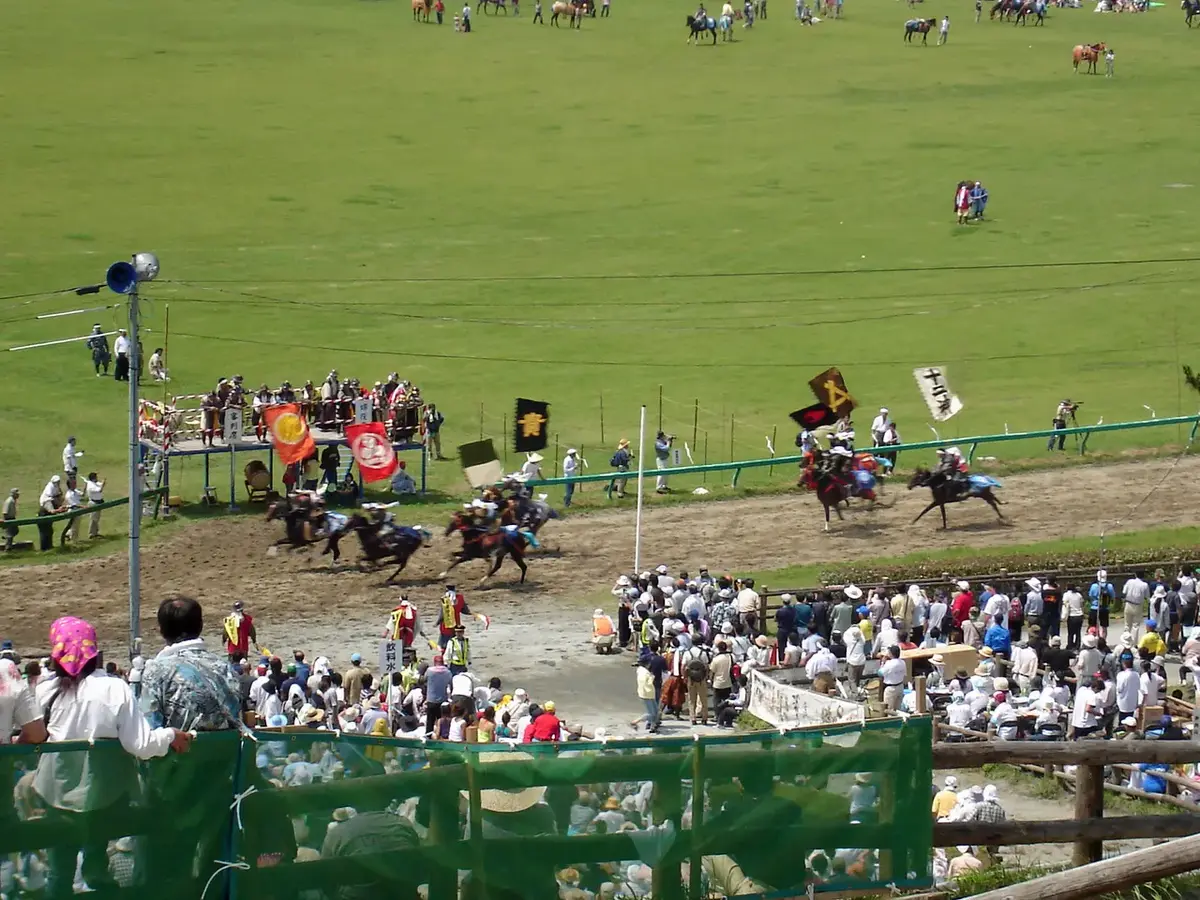
Minamisoma offers a rare case where historical performance, religious practice and modern civic identity still occupy the same landscape. Soma Nomaoi is not a staged theme-park event; it is a multi-day cultural observance involving shrines, horses, riders and neighborhoods across the former Soma domain.
Works, people, history and culture
- Soma Nomaoi, designated an Important Intangible Folk Cultural Property
- The Soma clan and the three Myoken shrines
- Post-2011 recovery and the changing coastal landscape
What to see
- Minamisoma City Museum
- Hibarigahara festival grounds
- Soma Ota Shrine and Soma Odaka Shrine
- Odaka streets and local recovery projects
See it now · Live video
Check current conditions
The surf and shoreline at Kitaizumi, with a viewer-controlled camera provided by the city.
Kitaizumi coast
Useful for understanding current coastal conditions, but never a substitute for weather, surf or evacuation warnings.
- Camera operator
- Minamisoma City
- Checked
- 22 August 2026
This provider does not expose a verified stable direct stream, so its current-view page opens in a new tab. Availability, angle and update frequency can change. Use official weather, transport and emergency notices for decisions that affect safety.
Getting there
From Tokyo, major stations or airports
JR Joban Line services connect Haranomachi with Sendai and Iwaki; through journeys from Tokyo vary, so check the current JR timetable. Sendai Airport is often the simplest airport gateway by public transport.
Getting around locally
Rail serves Kashima, Haranomachi and Odaka, but festival sites and coastal stops require buses, taxis, cycling or a car. Festival days bring road restrictions and special transport arrangements.
1–2 days; 3 days for the full festival cycle
Late May for Soma Nomaoi; otherwise spring and autumn for museums, cycling and town exploration.
Food, onsen and local culture
Horse culture is visible in museums, shrines and family traditions. Local food reflects both inland agriculture and the Pacific coast; ask businesses what is currently available rather than relying on old recovery-era guides.
Connect neighboring towns
Continue south to Namie or Iwaki, or north to Soma and Matsukawaura. Treat the route as a planned Hamadori journey, not a quick side trip from Aizu.

Coal, horses and the Pacific coast
Follow the Joban Line from Iwaki’s coal-to-hula story to Minamisoma’s living equestrian culture.
Iwaki · MinamisomaOpen route →Etiquette and safety
Check live transport and weather notices before departure. Historic sites, shrines and residential streets are shared community spaces: keep voices low, do not enter private property, and ask before photographing people. Never approach or startle horses, cross a procession, fly drones, or use flash near animals. Some coastal and former evacuation-zone conditions can change; follow signed access rules.
Questions before you choose Minamisoma
How much time should I allow?
1–2 days; 3 days for the full festival cycle. This is the practical minimum for seeing the town without turning transport into the main activity.
Can I visit without a car?
Rail serves Kashima, Haranomachi and Odaka, but festival sites and coastal stops require buses, taxis, cycling or a car. Festival days bring road restrictions and special transport arrangements.
When is the best time to go?
Late May for Soma Nomaoi; otherwise spring and autumn for museums, cycling and town exploration.
Information checked: 22 August 2026
Source register
Sources used for this page
Reconfirm changing information with the responsible organization before travel.
- Soma NomaoiMinamisoma City · Municipality · checked 22 August 2026
- Permanent exhibition: Soma NomaoiMinamisoma City Museum · Municipal museum · checked 22 August 2026
- Fukushima TravelFukushima Prefecture Tourism and Local Products Association · Prefectural tourism organization · checked 22 August 2026
- Railway maps and travel informationJR East · Transport operator · checked 22 August 2026