At a glance
1 full day; 2 with Dake Onsen or Mt Adatara
The historic center is walkable, though the climb through the castle park is substantial. Outer mountain and onsen areas require buses, taxi or a car.
Spring blossoms and October festival season are strongest; winter is quiet and cold.
Core relationships are source-checked. Reconfirm transport and facility details before departure.
Why this town matters
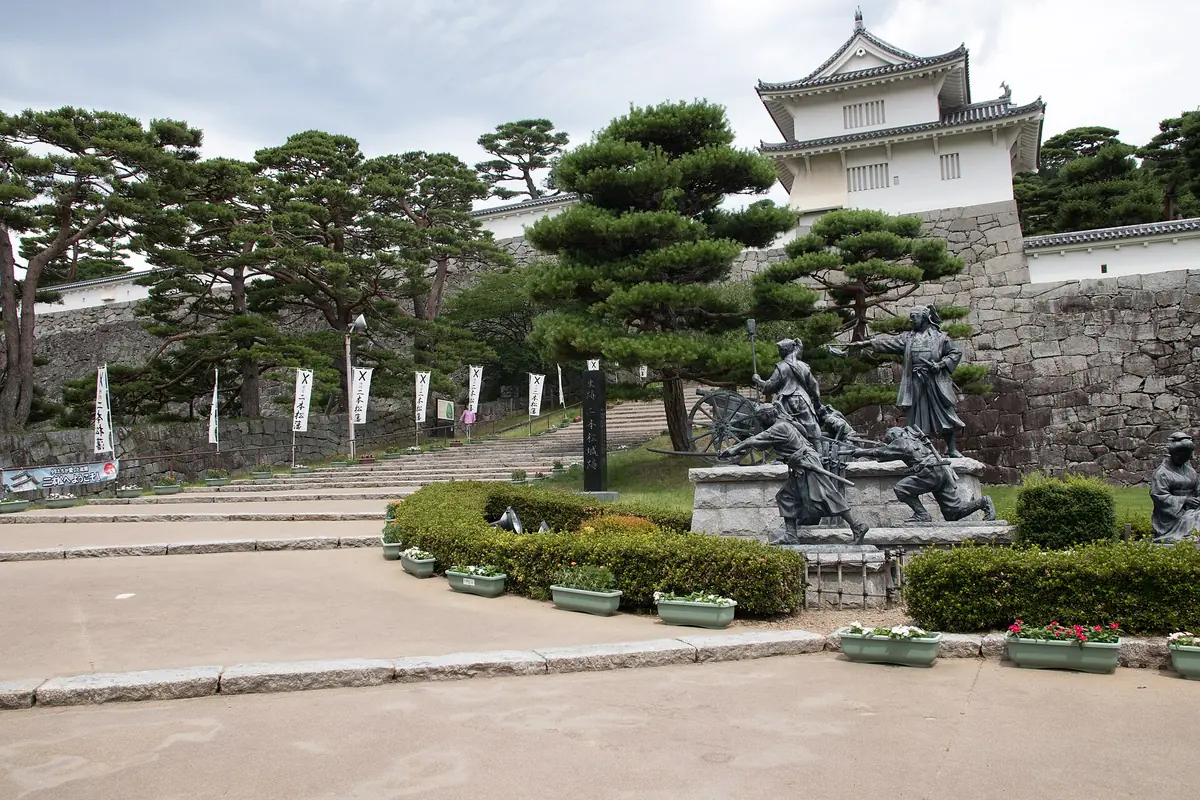
Nihonmatsu Castle gives the city a clear historical center, but the living story continues through neighborhood lantern teams and the annual chrysanthemum display. The result is more than a castle stop between Fukushima and Koriyama.
Works, people, history and culture
- Nihonmatsu Castle and its fall in the Boshin War
- The Nihonmatsu Boys Brigade memorial story
- Lantern Festival music, floats and neighborhood organization
What to see
- Kasumigajo Castle Park
- Minowa Gate and castle stonework
- Nihonmatsu History Museum
- Seasonal lantern and chrysanthemum events
Getting there
From Tokyo, major stations or airports
JR Tohoku Main Line trains connect Nihonmatsu with Fukushima and Koriyama. The castle park is about a twenty-minute walk from the station.
Getting around locally
The historic center is walkable, though the climb through the castle park is substantial. Outer mountain and onsen areas require buses, taxi or a car.
1 full day; 2 with Dake Onsen or Mt Adatara
Spring blossoms and October festival season are strongest; winter is quiet and cold.
Food, onsen and local culture
Lantern making, festival music and chrysanthemum cultivation are living skills. Local sake and sweets suit a slower central-city visit.
Connect neighboring towns
Pair Nihonmatsu with Fukushima City or Koriyama by rail, or add Dake Onsen as an overnight mountain extension.

Fukushima castle and festival corridor
A rail-friendly pairing of Fukushima City’s museums and onsen with Nihonmatsu Castle and festival culture.
Fukushima City · NihonmatsuOpen route →Etiquette and safety
Check live transport and weather notices before departure. Historic sites, shrines, temples and residential streets are shared community spaces: keep voices low, do not enter private property, and follow photography rules. Festival floats use real candles and crowded streets; follow steward instructions and never cross moving processions.
Questions before you choose Nihonmatsu
How much time should I allow?
1 full day; 2 with Dake Onsen or Mt Adatara. This is the practical minimum for seeing the town without turning transport into the main activity.
Can I visit without a car?
The historic center is walkable, though the climb through the castle park is substantial. Outer mountain and onsen areas require buses, taxi or a car.
When is the best time to go?
Spring blossoms and October festival season are strongest; winter is quiet and cold.
Information checked: 22 August 2026
Source register
Sources used for this page
Reconfirm changing information with the responsible organization before travel.
- Nihonmatsu CastleNihonmatsu City · Municipality · checked 22 August 2026
- The Nihonmatsu Lantern FestivalNihonmatsu City · Municipality · checked 22 August 2026
- Railway maps and travel informationJR East · Transport operator · checked 22 August 2026