A municipality, tourism body, rights holder, museum or other responsible organization confirms the relationship.
What the evidence establishes
Merchant storehouses, the Ohara Museum and Kojima textiles show how commercial wealth became both preservation and modern industry.
This classification is based on Okayama Prefectural Tourism Federation and Japan National Tourism Organization. The evidence label describes the documented relationship between the story, person, history or cultural practice and the real place.
What the label does not claim
The label is not permission to reproduce copyrighted images, characters, dialogue or logos. It also does not turn every nearby street, building or community account into an officially designated location. Where evidence stops, SceneTrail Japan says so.
Read the place, not only the reference
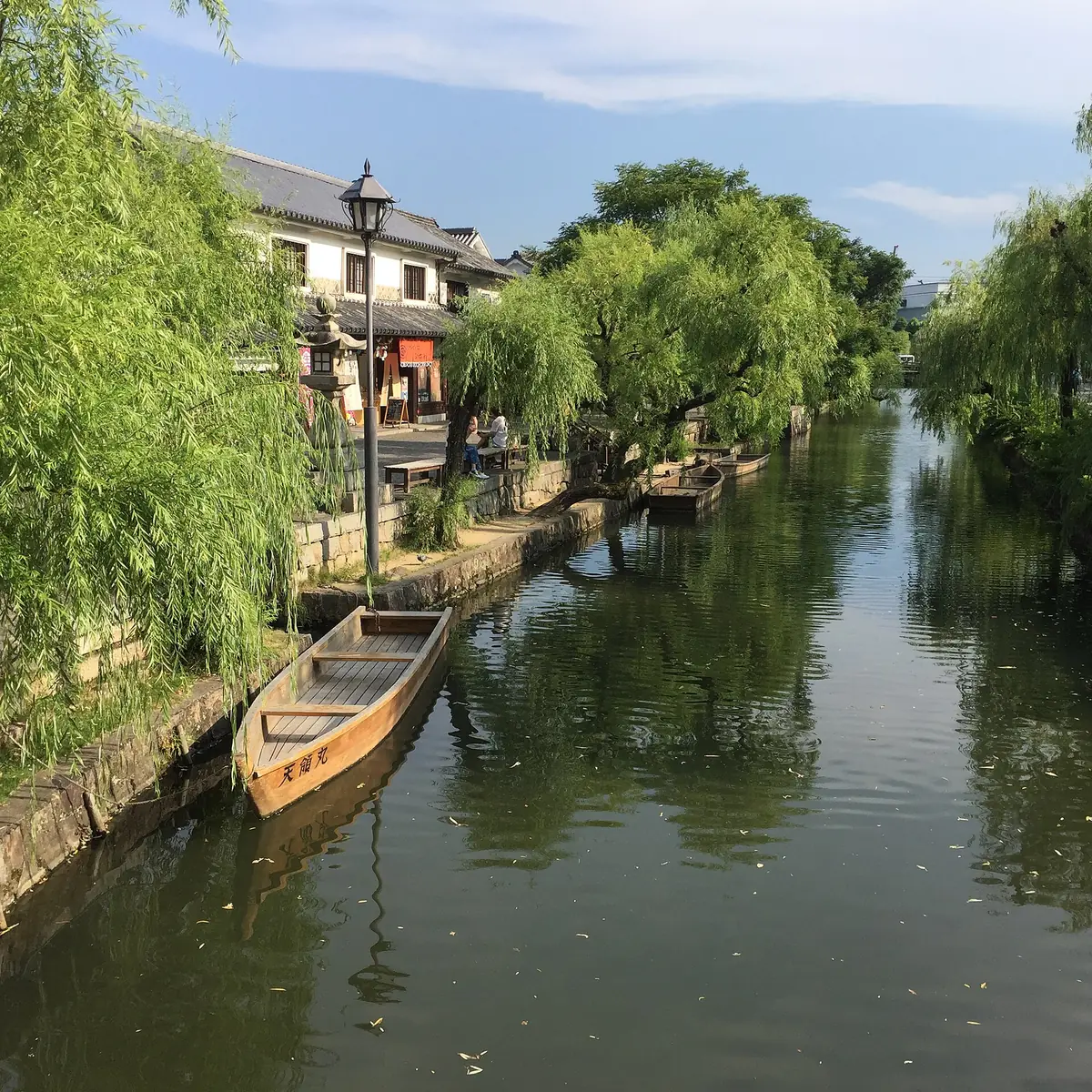
Kurashiki’s Bikan Historical Quarter is visually coherent because the canal, storehouses and merchant houses belonged to a functioning distribution center. The Ohara family’s industrial and cultural patronage adds a modern chapter, while Kojima’s textile and denim history shows the wider municipality cannot be reduced to one preserved street.
Useful context includes Edo-period rice and goods distribution through the Kurashiki River; Merchant storehouses and preserved machiya streets; Ohara industrial patronage and the Ohara Museum of Art. These connections matter because they keep the visit rooted in the town rather than reducing it to a photograph or checklist.
Practical starting points
Open the places in visit order
These public places provide a practical route through the town. They are not all claimed as exact scene locations; the evidence statement above defines what is confirmed.
- 01Bikan Historical Quarter early and after duskOpen in Google Maps ↗
- 02Ohara Museum of ArtOpen in Google Maps ↗
- 03Kurashiki Museum of FolkcraftOpen in Google Maps ↗
- 04Achi Shrine and Honmachi lanesOpen in Google Maps ↗
Plan the visit
JR Sanyo Line trains connect Okayama and Kurashiki in roughly twenty minutes. The Bikan Quarter is about a ten-to-fifteen-minute walk from the station. Kojima uses a different JR line and needs its own plan.
The central historical district is best on foot. Riverboat tickets can be limited and museums keep individual closing days. Bicycles help with outer central sites, while Kojima requires rail or road transport.
Open the complete Kurashiki guide →
Copyright and conduct
No frame grabs or character artwork are reproduced. Remain on public routes, keep entrances and traffic clear, follow venue photography rules and never enter private land to recreate a shot.
Check official opening, weather and transport notices before departure. Temples, shrines, museums, historic streets and residential lanes are shared community spaces: keep routes clear, follow photography rules and never enter private property. Canal edges, stone surfaces and narrow lanes require attention. Ask before photographing inside shops, workshops or private-looking courtyards.
Source register
Sources used for this page
Reconfirm changing information with the responsible organization before travel.
- Kurashiki Bikan Historical QuarterOkayama Prefectural Tourism Federation · Prefectural tourism organization · checked 22 August 2026
- Kurashiki destination guideJapan National Tourism Organization · National tourism organization · checked 22 August 2026