At a glance
1–2 days; 3 with Kojima or the Seto Inland Sea
The central historical district is best on foot. Riverboat tickets can be limited and museums keep individual closing days. Bicycles help with outer central sites, while Kojima requires rail or road transport.
Year-round; spring and autumn favor walking, summer is hot, and evening lighting rewards an overnight stay.
Core relationships are source-checked. Reconfirm transport and facility details before departure.
Why this town matters
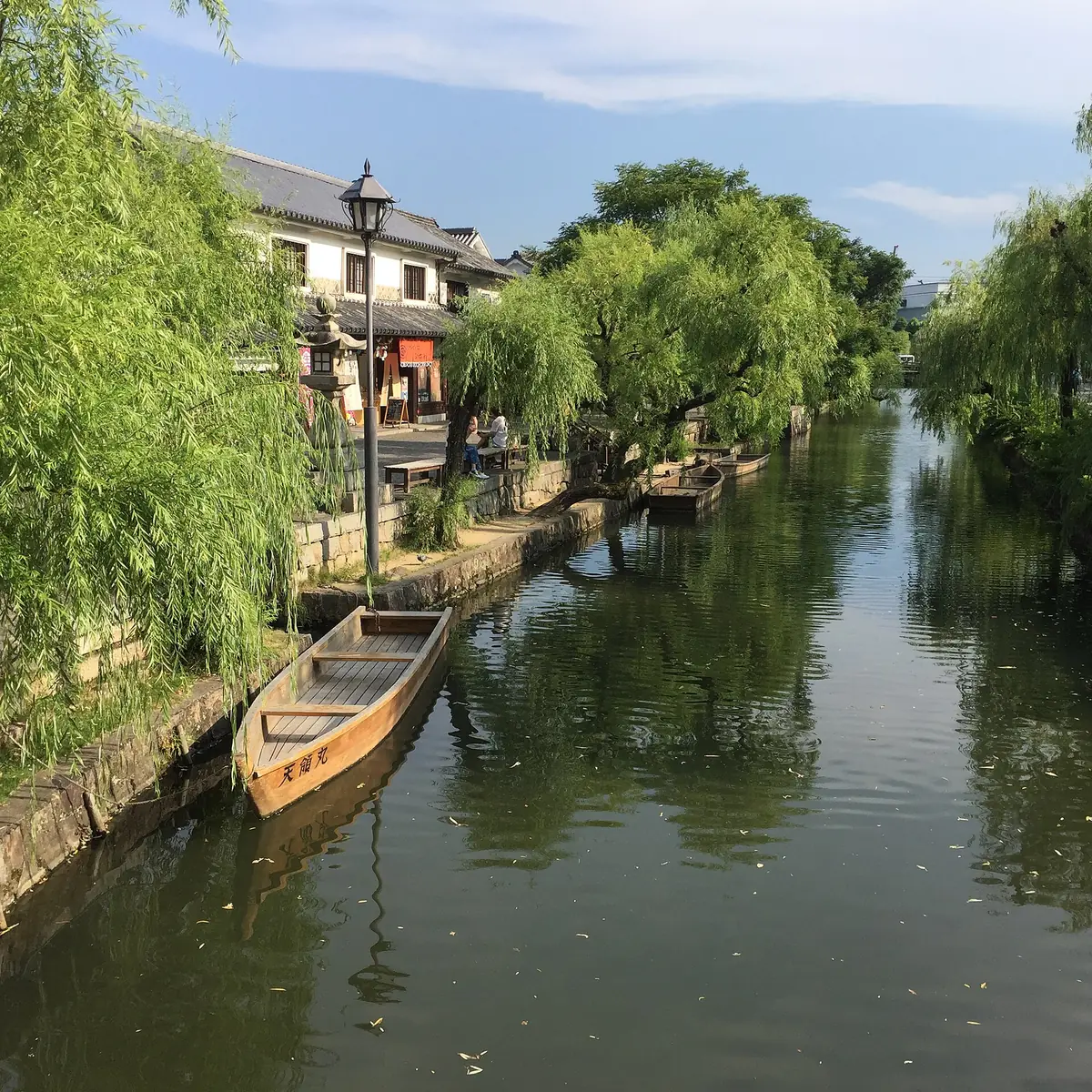
Kurashiki’s Bikan Historical Quarter is visually coherent because the canal, storehouses and merchant houses belonged to a functioning distribution center. The Ohara family’s industrial and cultural patronage adds a modern chapter, while Kojima’s textile and denim history shows the wider municipality cannot be reduced to one preserved street.
Works, people, history and culture
- Edo-period rice and goods distribution through the Kurashiki River
- Merchant storehouses and preserved machiya streets
- Ohara industrial patronage and the Ohara Museum of Art
- Kojima textiles and the development of Japanese denim
What to see
- Bikan Historical Quarter early and after dusk
- Ohara Museum of Art
- Kurashiki Museum of Folkcraft
- Achi Shrine and Honmachi lanes
- Kojima Jeans Street as a separate excursion
Getting there
From Tokyo, major stations or airports
JR Sanyo Line trains connect Okayama and Kurashiki in roughly twenty minutes. The Bikan Quarter is about a ten-to-fifteen-minute walk from the station. Kojima uses a different JR line and needs its own plan.
Getting around locally
The central historical district is best on foot. Riverboat tickets can be limited and museums keep individual closing days. Bicycles help with outer central sites, while Kojima requires rail or road transport.
1–2 days; 3 with Kojima or the Seto Inland Sea
Year-round; spring and autumn favor walking, summer is hot, and evening lighting rewards an overnight stay.
Food, onsen and local culture
Local sushi, fruit, mingei craft, canvas and denim show both agricultural and industrial Okayama. Spend time in museums and workshops rather than using the quarter only as a backdrop.
Connect neighboring towns
Use a full day for the canal, museums and backstreets. Continue east to Okayama or west toward Onomichi; add Kojima only when you have another half or full day.

Merchant towns to the Seto Inland Sea
Move from Kurashiki’s canal commerce and museums to Onomichi’s hillside temples, ferries and maritime geography.
Kurashiki · OnomichiOpen route →Etiquette and safety
Check official opening, weather and transport notices before departure. Temples, shrines, museums, historic streets and residential lanes are shared community spaces: keep routes clear, follow photography rules and never enter private property. Canal edges, stone surfaces and narrow lanes require attention. Ask before photographing inside shops, workshops or private-looking courtyards.
Questions before you choose Kurashiki
How much time should I allow?
1–2 days; 3 with Kojima or the Seto Inland Sea. This is the practical minimum for seeing the town without turning transport into the main activity.
Can I visit without a car?
The central historical district is best on foot. Riverboat tickets can be limited and museums keep individual closing days. Bicycles help with outer central sites, while Kojima requires rail or road transport.
When is the best time to go?
Year-round; spring and autumn favor walking, summer is hot, and evening lighting rewards an overnight stay.
Information checked: 22 August 2026
Source register
Sources used for this page
Reconfirm changing information with the responsible organization before travel.
- Kurashiki Bikan Historical QuarterOkayama Prefectural Tourism Federation · Prefectural tourism organization · checked 22 August 2026
- Kurashiki destination guideJapan National Tourism Organization · National tourism organization · checked 22 August 2026
- Responsible travel in JapanJapan National Tourism Organization · National tourism organization · checked 22 August 2026