A municipality, tourism body, rights holder, museum or other responsible organization confirms the relationship.
What the evidence establishes
Dejima exchange, Christian history and the evidence of the atomic bombing require a layered reading of Nagasaki rather than one simplified narrative.
This classification is based on Nagasaki International Tourism and Convention Association and Nagasaki City and Nagasaki City. The evidence label describes the documented relationship between the story, person, history or cultural practice and the real place.
What the label does not claim
The label is not permission to reproduce copyrighted images, characters, dialogue or logos. It also does not turn every nearby street, building or community account into an officially designated location. Where evidence stops, SceneTrail Japan says so.
Read the place, not only the reference
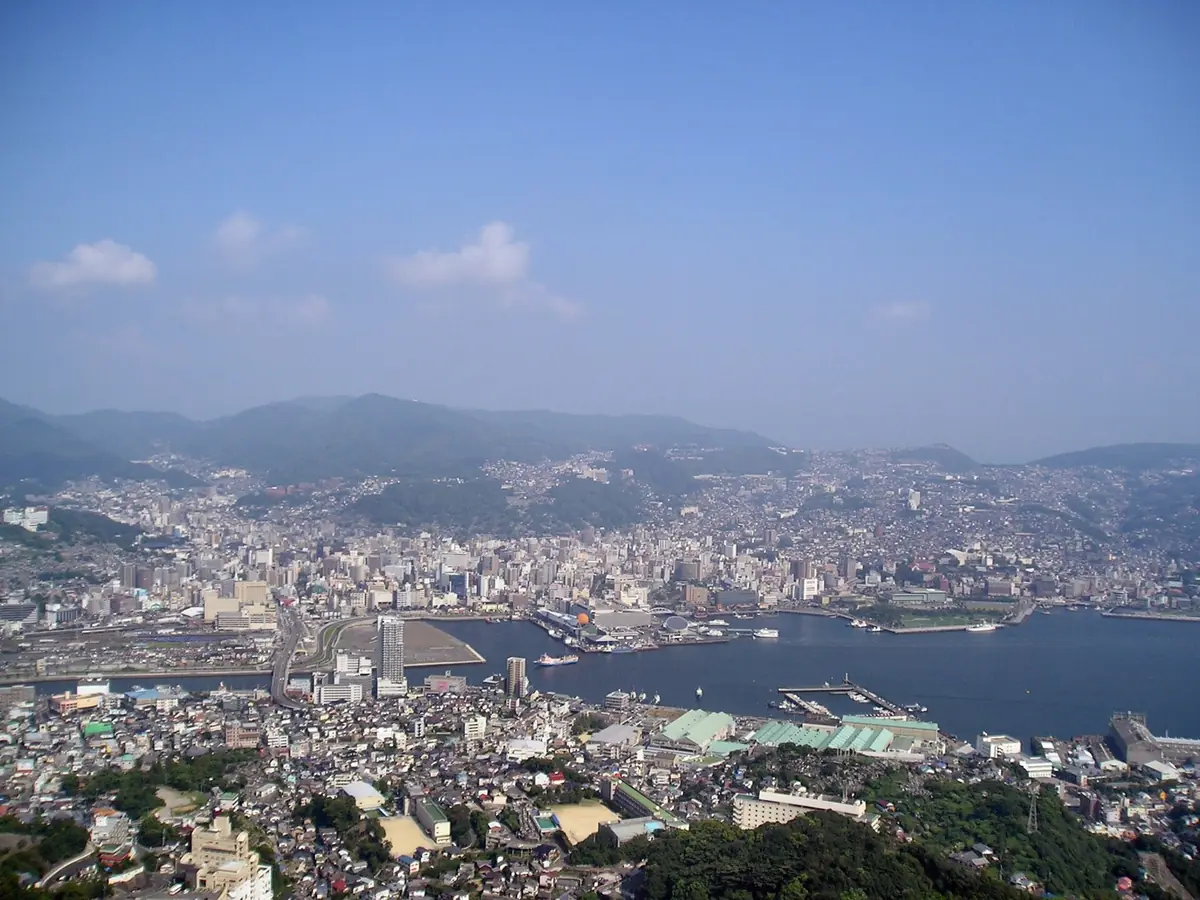
Nagasaki resists a single story. Dejima and Chinese trade explain its role as an international window; churches and communities preserve a difficult religious history; shipbuilding shaped modern industry; and the atomic bombing of 1945 demands time for evidence, testimony and reflection rather than a quick photo stop.
Useful context includes Dejima and regulated exchange with the Netherlands during national seclusion; Chinese trade, temples and the Nagasaki Kunchi tradition; Christian communities and the history of suppression and survival. These connections matter because they keep the visit rooted in the town rather than reducing it to a photograph or checklist.
Practical starting points
Open the places in visit order
These public places provide a practical route through the town. They are not all claimed as exact scene locations; the evidence statement above defines what is confirmed.
- 01Dejima and the old foreign settlement contextOpen in Google Maps ↗
- 02Oura Cathedral and Glover GardenOpen in Google Maps ↗
- 03Nagasaki Atomic Bomb Museum, Hypocenter and Peace ParkOpen in Google Maps ↗
- 04Meganebashi and temple districtsOpen in Google Maps ↗
Plan the visit
The Nishi Kyushu Shinkansen reaches Nagasaki via Takeo-Onsen connections from Hakata. Airport buses serve central Nagasaki; check the stop closest to the hotel because the city is long, hilly and divided by the harbor.
Trams handle many central journeys, but slopes and transfers still require time. Group the peace district, Dejima-center and Minamiyamate into separate blocks. Use elevators, slope cars or taxis when mobility is limited.
Open the complete Nagasaki guide →
Copyright and conduct
No frame grabs or character artwork are reproduced. Remain on public routes, keep entrances and traffic clear, follow venue photography rules and never enter private land to recreate a shot.
Check official opening, weather and transport notices before departure. Temples, shrines, museums, historic streets and residential lanes are shared community spaces: keep routes clear, follow photography rules and never enter private property. Treat the Atomic Bomb Museum, Hypocenter, memorials and survivor accounts as places of mourning and learning. Avoid performative poses, loud behavior and reductive captions.
Source register
Sources used for this page
Reconfirm changing information with the responsible organization before travel.
- Travel Nagasaki official city guideNagasaki International Tourism and Convention Association · Official tourism organization · checked 22 August 2026
- Nagasaki Atomic Bomb MuseumNagasaki City · Municipality cultural site · checked 22 August 2026
- About DejimaNagasaki City · Municipality cultural site · checked 22 August 2026