At a glance
2–3 days
Trams handle many central journeys, but slopes and transfers still require time. Group the peace district, Dejima-center and Minamiyamate into separate blocks. Use elevators, slope cars or taxis when mobility is limited.
Spring and autumn are comfortable; summer is hot and humid, August remembrance periods require particular respect, and autumn Kunchi dates are busy.
Core relationships are source-checked. Reconfirm transport and facility details before departure.
Why this town matters
Nagasaki resists a single story. Dejima and Chinese trade explain its role as an international window; churches and communities preserve a difficult religious history; shipbuilding shaped modern industry; and the atomic bombing of 1945 demands time for evidence, testimony and reflection rather than a quick photo stop.
Works, people, history and culture
- Dejima and regulated exchange with the Netherlands during national seclusion
- Chinese trade, temples and the Nagasaki Kunchi tradition
- Christian communities and the history of suppression and survival
- The atomic bombing, survivor testimony and the city’s continuing peace work
What to see
- Dejima and the old foreign settlement context
- Oura Cathedral and Glover Garden
- Nagasaki Atomic Bomb Museum, Hypocenter and Peace Park
- Meganebashi and temple districts
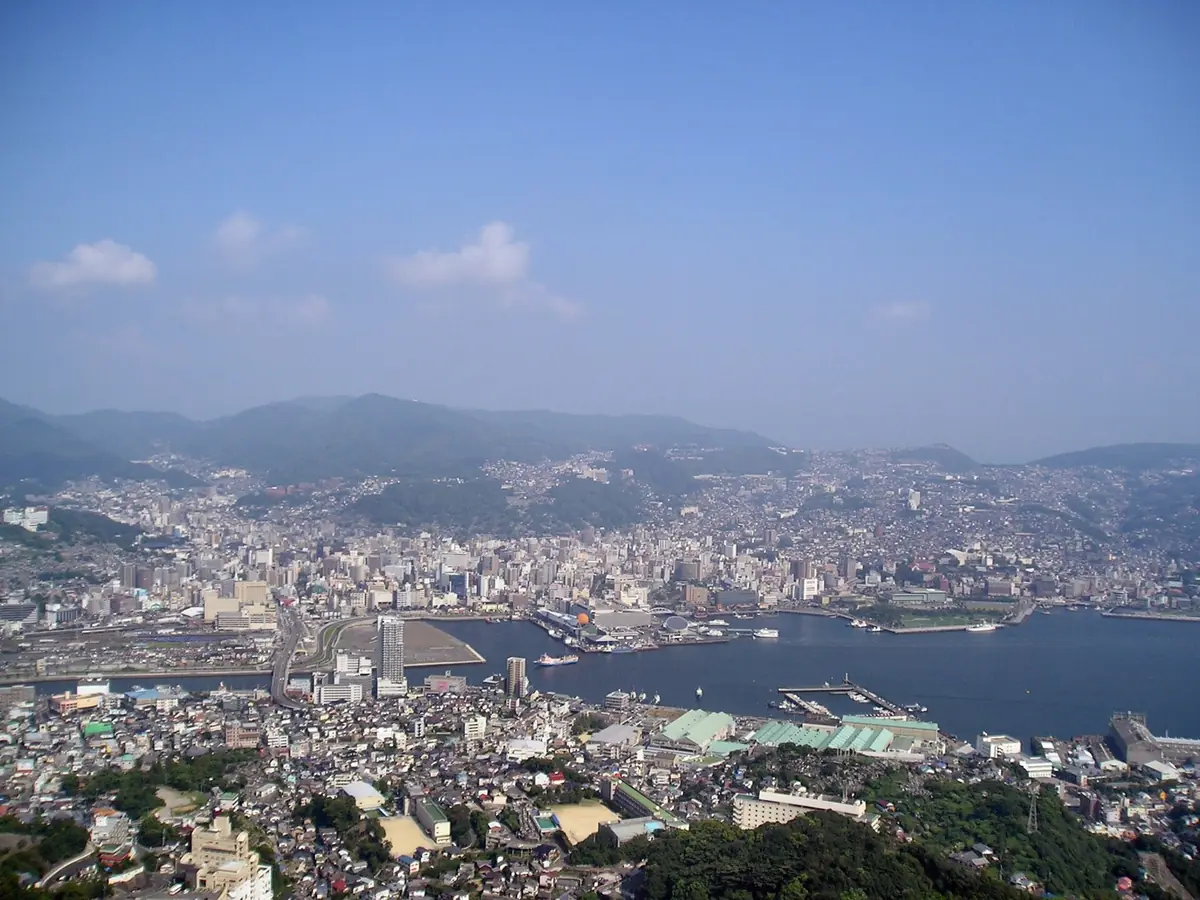
- Mt Inasa or Nabekanmuri for harbor geography
See it now · Live video
Check current conditions
Nagasaki city, harbor and surrounding ridges from Mt Inasa.
Nagasaki from Mt Inasa
Useful for checking visibility and understanding how the harbor city occupies its narrow valleys and slopes.
- Camera operator
- Inasayama Park
- Checked
- 22 August 2026
This provider does not expose a verified stable direct stream, so its current-view page opens in a new tab. Availability, angle and update frequency can change. Use official weather, transport and emergency notices for decisions that affect safety.
Getting there
From Tokyo, major stations or airports
The Nishi Kyushu Shinkansen reaches Nagasaki via Takeo-Onsen connections from Hakata. Airport buses serve central Nagasaki; check the stop closest to the hotel because the city is long, hilly and divided by the harbor.
Getting around locally
Trams handle many central journeys, but slopes and transfers still require time. Group the peace district, Dejima-center and Minamiyamate into separate blocks. Use elevators, slope cars or taxis when mobility is limited.
2–3 days
Spring and autumn are comfortable; summer is hot and humid, August remembrance periods require particular respect, and autumn Kunchi dates are busy.
Food, onsen and local culture
Champon, sara udon, castella, shippoku cuisine and Chinese-influenced sweets show centuries of exchange. The city’s food should support the history, not replace it.
Connect neighboring towns
Use one day for Dejima, central trade history and the southern hillside, then one for the peace district and museums. Add an island or industrial-heritage trip only with a third day.
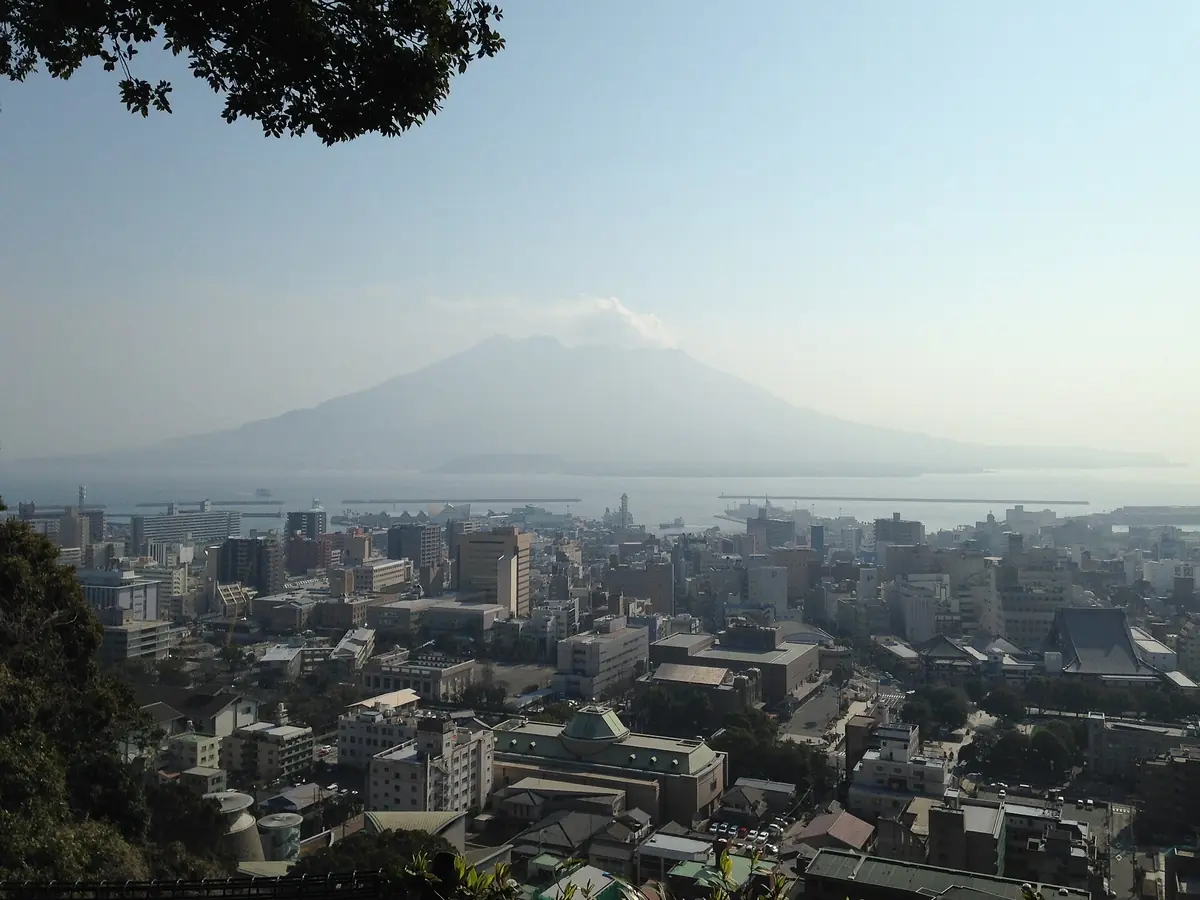

Nagasaki and Kagoshima: two southern port cities
Give each city time for difficult history, international exchange and living waterfront geography, with a dedicated rail-transfer day between them.
Nagasaki · KagoshimaOpen route →Etiquette and safety
Check official opening, weather and transport notices before departure. Temples, shrines, museums, historic streets and residential lanes are shared community spaces: keep routes clear, follow photography rules and never enter private property. Treat the Atomic Bomb Museum, Hypocenter, memorials and survivor accounts as places of mourning and learning. Avoid performative poses, loud behavior and reductive captions.
Questions before you choose Nagasaki
How much time should I allow?
2–3 days. This is the practical minimum for seeing the town without turning transport into the main activity.
Can I visit without a car?
Trams handle many central journeys, but slopes and transfers still require time. Group the peace district, Dejima-center and Minamiyamate into separate blocks. Use elevators, slope cars or taxis when mobility is limited.
When is the best time to go?
Spring and autumn are comfortable; summer is hot and humid, August remembrance periods require particular respect, and autumn Kunchi dates are busy.
Information checked: 22 August 2026
Source register
Sources used for this page
Reconfirm changing information with the responsible organization before travel.
- Travel Nagasaki official city guideNagasaki International Tourism and Convention Association · Official tourism organization · checked 22 August 2026
- Nagasaki Atomic Bomb MuseumNagasaki City · Municipality cultural site · checked 22 August 2026
- About DejimaNagasaki City · Municipality cultural site · checked 22 August 2026
- Responsible travel in JapanJapan National Tourism Organization · National tourism organization · checked 22 August 2026