A municipality, tourism body, rights holder, museum or other responsible organization confirms the relationship.
What the evidence establishes
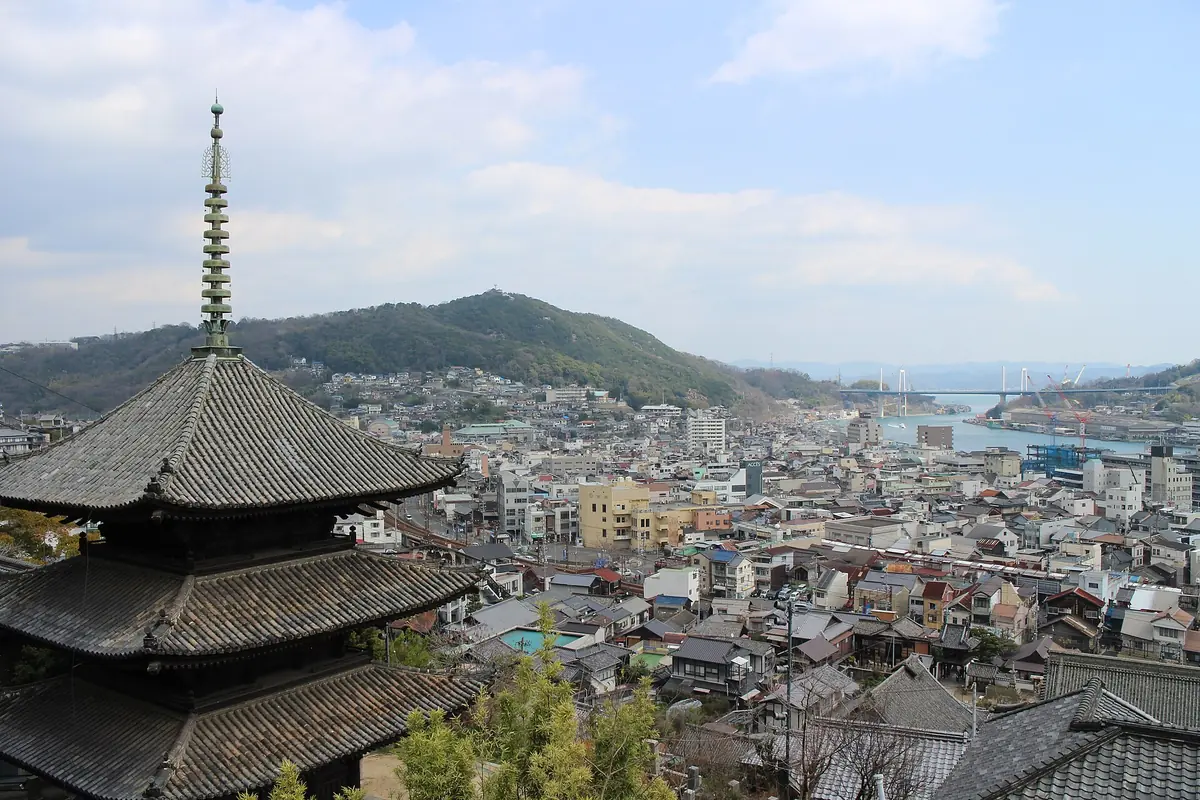
Temple paths, port geography, literature, cinema and the Shimanami gateway meet in the narrow city between hillside and channel.
This classification is based on Onomichi Tourism Association and Shimanami Japan. The evidence label describes the documented relationship between the story, person, history or cultural practice and the real place.
What the label does not claim
The label is not permission to reproduce copyrighted images, characters, dialogue or logos. It also does not turn every nearby street, building or community account into an officially designated location. Where evidence stops, SceneTrail Japan says so.
Read the place, not only the reference
Onomichi’s character comes from compression: a narrow strip between mountain and channel, crossed by rail, ferries and stairways. Temples and hillside homes look over a working maritime route, while writers and filmmakers used the same geography. The Shimanami Kaido begins here, but the old city deserves its own day before departure.
Useful context includes The Temple Walk and the religious geography of the hillside; A long association with Japanese literature and film; Ferry traffic, shipbuilding and the Seto Inland Sea. These connections matter because they keep the visit rooted in the town rather than reducing it to a photograph or checklist.
Practical starting points
Open the places in visit order
These public places provide a practical route through the town. They are not all claimed as exact scene locations; the evidence statement above defines what is confirmed.
- 01Senkoji and the hillside viewOpen in Google Maps ↗
- 02A selected section of the Temple WalkOpen in Google Maps ↗
- 03Onomichi City Museum of LiteratureOpen in Google Maps ↗
- 04The waterfront and short ferry crossing to MukaishimaOpen in Google Maps ↗
Plan the visit
JR Onomichi Station sits beside the old city and waterfront. Shin-Onomichi Station is on the Shinkansen line but several kilometers inland; use a bus or taxi rather than assuming the stations are adjacent.
The central waterfront is flat, but the defining temple routes use steep, uneven stairs. Leave large luggage near the station. Cyclists should reserve an appropriate bicycle and separate city walking from the full island route.
Open the complete Onomichi guide →
Copyright and conduct
No frame grabs or character artwork are reproduced. Remain on public routes, keep entrances and traffic clear, follow venue photography rules and never enter private land to recreate a shot.
Check official opening, weather and transport notices before departure. Temples, shrines, museums, historic streets and residential lanes are shared community spaces: keep routes clear, follow photography rules and never enter private property. Stone steps become slippery in rain. On the cycling route, use a helmet, lights and water, check wind and ferry conditions, and do not overestimate one-day range.
Source register
Sources used for this page
Reconfirm changing information with the responsible organization before travel.
- Onomichi sightseeing guideOnomichi Tourism Association · Official tourism organization · checked 22 August 2026
- First-timer’s guide to Shimanami Kaido cyclingShimanami Japan · Official destination organization · checked 22 August 2026