At a glance
2 days; 3–4 with a Shimanami overnight
The central waterfront is flat, but the defining temple routes use steep, uneven stairs. Leave large luggage near the station. Cyclists should reserve an appropriate bicycle and separate city walking from the full island route.
Spring and autumn are best for slopes and cycling; summer heat is serious and typhoon weather can disrupt ferries and riding.
Core relationships are source-checked. Reconfirm transport and facility details before departure.
Why this town matters
Onomichi’s character comes from compression: a narrow strip between mountain and channel, crossed by rail, ferries and stairways. Temples and hillside homes look over a working maritime route, while writers and filmmakers used the same geography. The Shimanami Kaido begins here, but the old city deserves its own day before departure.
Works, people, history and culture
- The Temple Walk and the religious geography of the hillside
- A long association with Japanese literature and film
- Ferry traffic, shipbuilding and the Seto Inland Sea
- The Onomichi starting point of the Shimanami Kaido
What to see
- Senkoji and the hillside view
- A selected section of the Temple Walk
- Onomichi City Museum of Literature
- The waterfront and short ferry crossing to Mukaishima
- An early start on the Shimanami Kaido
See it now · Live video
Check current conditions
The Onomichi Channel, hillside city and islands from the ropeway summit station.
Onomichi Channel from Senkoji
One of the clearest ways to understand Onomichi's steep city-to-sea geography before arriving.
- Camera operator
- Senkoji Ropeway
- Checked
- 22 August 2026
This provider does not expose a verified stable direct stream, so its current-view page opens in a new tab. Availability, angle and update frequency can change. Use official weather, transport and emergency notices for decisions that affect safety.
Getting there
From Tokyo, major stations or airports
JR Onomichi Station sits beside the old city and waterfront. Shin-Onomichi Station is on the Shinkansen line but several kilometers inland; use a bus or taxi rather than assuming the stations are adjacent.
Getting around locally
The central waterfront is flat, but the defining temple routes use steep, uneven stairs. Leave large luggage near the station. Cyclists should reserve an appropriate bicycle and separate city walking from the full island route.
2 days; 3–4 with a Shimanami overnight
Spring and autumn are best for slopes and cycling; summer heat is serious and typhoon weather can disrupt ferries and riding.
Food, onsen and local culture
Onomichi ramen, citrus, seafood, coffee shops and small cultural spaces belong to a working port rather than a sealed heritage district. Quiet residential alleys require restraint.
Connect neighboring towns
Spend day one on the hillside, temples and waterfront. Start the Shimanami route early on day two and stay on an island or in Imabari rather than racing the full route for a badge.
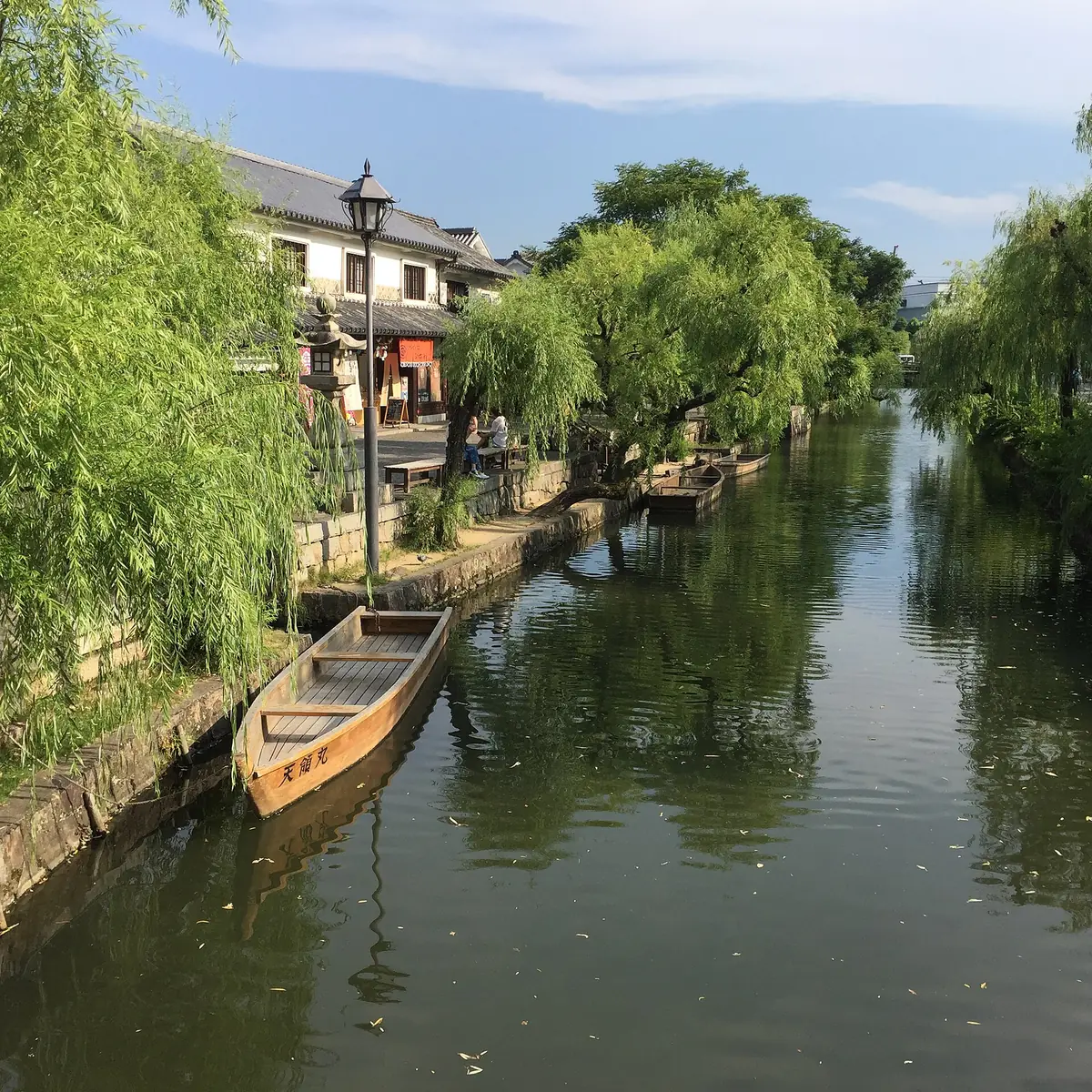

Merchant towns to the Seto Inland Sea
Move from Kurashiki’s canal commerce and museums to Onomichi’s hillside temples, ferries and maritime geography.
Kurashiki · OnomichiOpen route →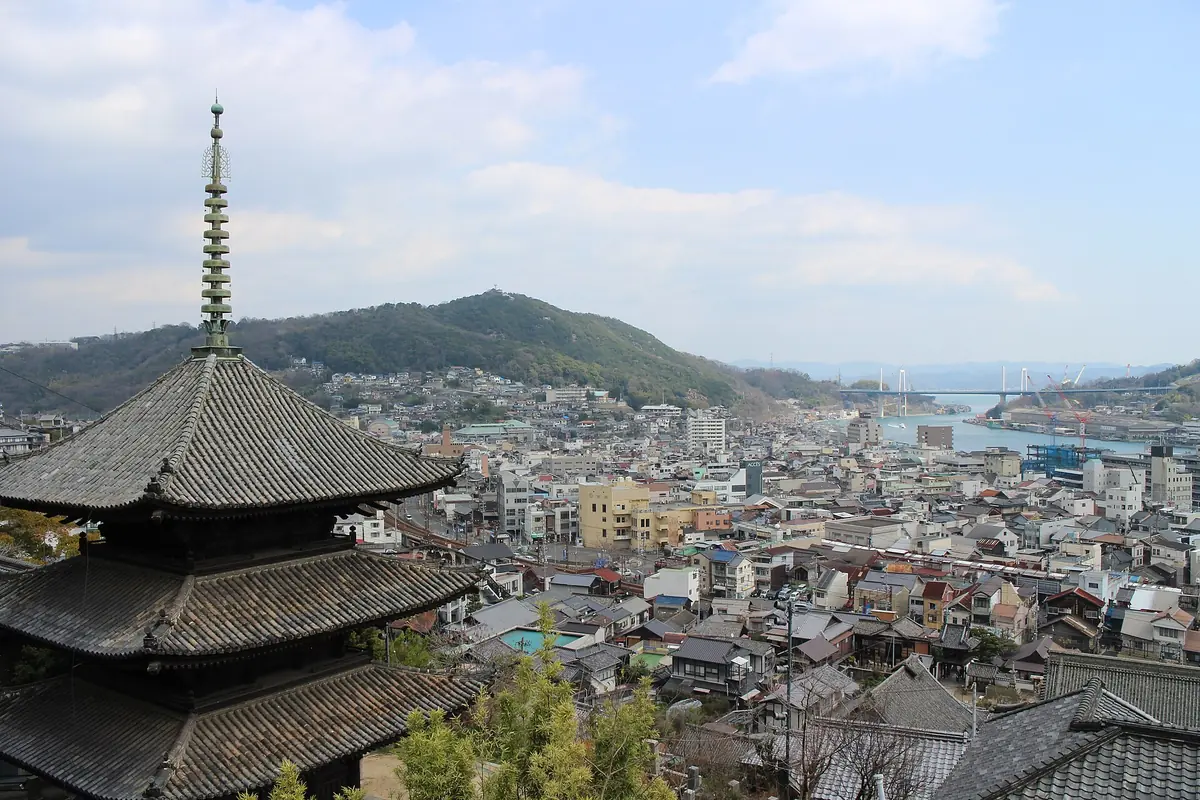

Onomichi to Matsuyama: Shimanami Kaido by Bike and Ferry
Travel from Onomichi to Matsuyama through the Shimanami islands, with a realistic cycling pace, an island overnight, the Imabari connection and a ferry-aware backup plan.
Onomichi · MatsuyamaOpen route →Etiquette and safety
Check official opening, weather and transport notices before departure. Temples, shrines, museums, historic streets and residential lanes are shared community spaces: keep routes clear, follow photography rules and never enter private property. Stone steps become slippery in rain. On the cycling route, use a helmet, lights and water, check wind and ferry conditions, and do not overestimate one-day range.
Questions before you choose Onomichi
How much time should I allow?
2 days; 3–4 with a Shimanami overnight. This is the practical minimum for seeing the town without turning transport into the main activity.
Can I visit without a car?
The central waterfront is flat, but the defining temple routes use steep, uneven stairs. Leave large luggage near the station. Cyclists should reserve an appropriate bicycle and separate city walking from the full island route.
When is the best time to go?
Spring and autumn are best for slopes and cycling; summer heat is serious and typhoon weather can disrupt ferries and riding.
Information checked: 22 August 2026
Source register
Sources used for this page
Reconfirm changing information with the responsible organization before travel.
- Onomichi sightseeing guideOnomichi Tourism Association · Official tourism organization · checked 22 August 2026
- First-timer’s guide to Shimanami Kaido cyclingShimanami Japan · Official destination organization · checked 22 August 2026
- Responsible travel in JapanJapan National Tourism Organization · National tourism organization · checked 22 August 2026