At a glance
1 full day; 1 night for festival season or a slower merchant-town visit
The historic core is walkable but sits north of the largest stations. Local buses and share cycles reduce backtracking. Weekend roads around Ichibangai are crowded, so rail plus walking is generally easier than driving.
Winter weekdays are calm; spring and autumn favor walking; the October festival period requires advance crowd and transport planning.
Core relationships are source-checked. Reconfirm transport and facility details before departure.
Why this town matters
The label Little Edo is useful only when it leads beyond costume nostalgia. Kawagoe’s value lies in the commercial ties that linked it to Edo, the kura buildings rebuilt after major fires, the remaining castle structures and a festival culture organized by local neighborhoods.
Works, people, history and culture
- Kawagoe Castle and the city’s strategic relationship with Edo
- Kurazukuri storehouses and the merchant response to urban fire
- Kawagoe Hikawa Festival, floats and neighborhood performance
- Kita-in Temple and surviving buildings connected with Edo Castle
What to see
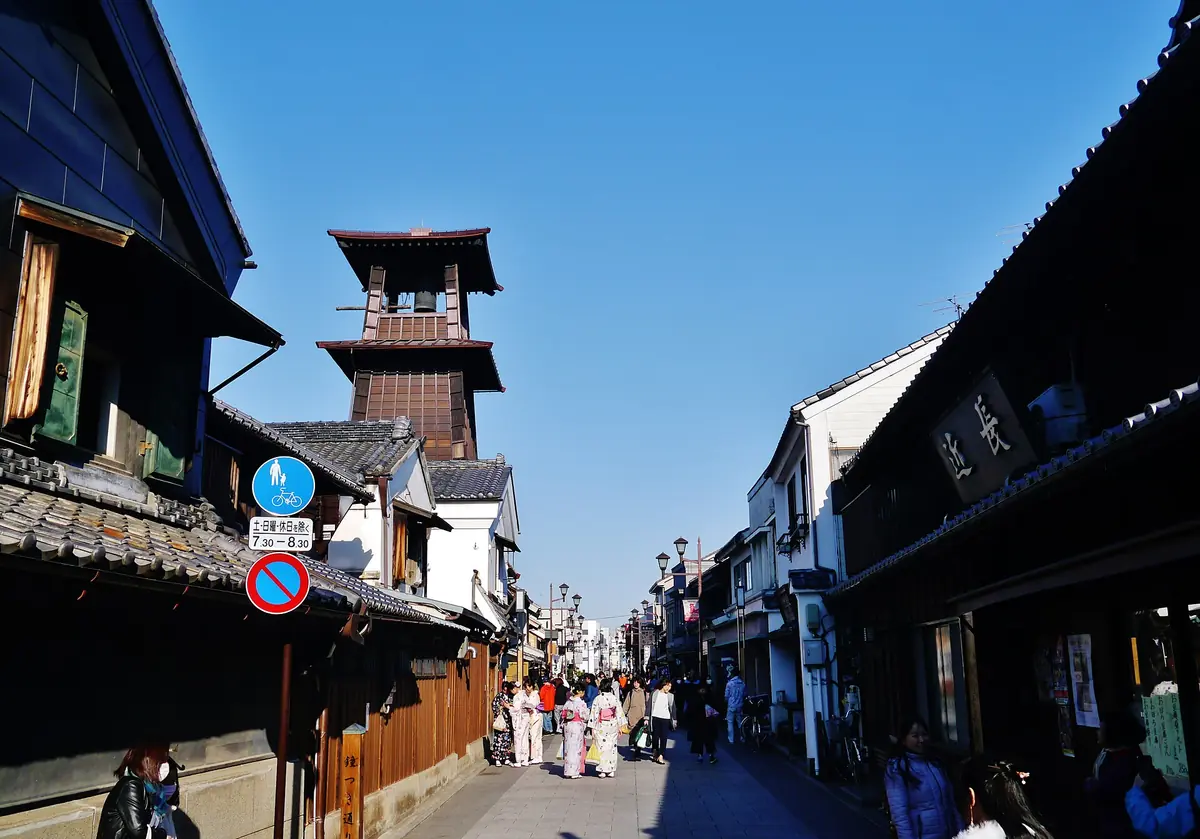
- Kurazukuri Street and Toki no Kane
- Kawagoe Castle Honmaru Goten
- Kita-in and its historic precinct
- Kawagoe Festival Museum
- Kashiya Yokocho and the older shopping streets
See it now · Live video
Check current conditions
The traditional warehouse street around Ichibangai and the Toki no Kane bell tower district.
Ichibangai and the Toki no Kane district
Useful for seeing street atmosphere and visitor density before walking the preserved center.
- Camera operator
- Kawagoe TV
- Checked
- 22 August 2026
This provider does not expose a verified stable direct stream, so its current-view page opens in a new tab. Availability, angle and update frequency can change. Use official weather, transport and emergency notices for decisions that affect safety.
Getting there
From Tokyo, major stations or airports
Tobu trains from Ikebukuro, Seibu trains from Shinjuku and JR services all reach different Kawagoe stations. Choose the arrival station around your Tokyo base and the walking route you intend to follow.
Getting around locally
The historic core is walkable but sits north of the largest stations. Local buses and share cycles reduce backtracking. Weekend roads around Ichibangai are crowded, so rail plus walking is generally easier than driving.
1 full day; 1 night for festival season or a slower merchant-town visit
Winter weekdays are calm; spring and autumn favor walking; the October festival period requires advance crowd and transport planning.
Food, onsen and local culture
Sweet potatoes, unagi, confectionery and local sake reflect different chapters of the trading town. Spend beyond the busiest main street so the visit supports ordinary shops as well as photo stops.
Connect neighboring towns
Start at Honmaru Goten or Kita-in, then work through the merchant district toward Toki no Kane and Kashiya Yokocho. Kawagoe pairs with Tokyo, not with a forced same-day Hakone transfer.

A full day in merchant Kawagoe
Read the castle, temple and merchant districts in sequence, leaving enough time for streets beyond the main photo corridor.
KawagoeOpen route →Etiquette and safety
Check official opening, weather and transport notices before departure. Temples, shrines, museums, historic streets and residential lanes are shared community spaces: keep routes clear, follow photography rules and never enter private property. Pavements are narrow beside active traffic. Do not step into the road for photographs, and follow crowd controls during the festival.
Questions before you choose Kawagoe
How much time should I allow?
1 full day; 1 night for festival season or a slower merchant-town visit. This is the practical minimum for seeing the town without turning transport into the main activity.
Can I visit without a car?
The historic core is walkable but sits north of the largest stations. Local buses and share cycles reduce backtracking. Weekend roads around Ichibangai are crowded, so rail plus walking is generally easier than driving.
When is the best time to go?
Winter weekdays are calm; spring and autumn favor walking; the October festival period requires advance crowd and transport planning.
Information checked: 22 August 2026
Source register
Sources used for this page
Reconfirm changing information with the responsible organization before travel.
- Koedo Kawagoe official visitor guideKoedo Kawagoe Tourism Association · Official tourism organization · checked 22 August 2026
- Kawagoe Warehouse DistrictJapan National Tourism Organization · National tourism organization · checked 22 August 2026
- Responsible travel in JapanJapan National Tourism Organization · National tourism organization · checked 22 August 2026